
Black Petals
Horror/Science Fiction Magazine
July 15th, 2026
Issue # 116

The Unexpected: Flash Fiction by Stephen Lochton Kincaid
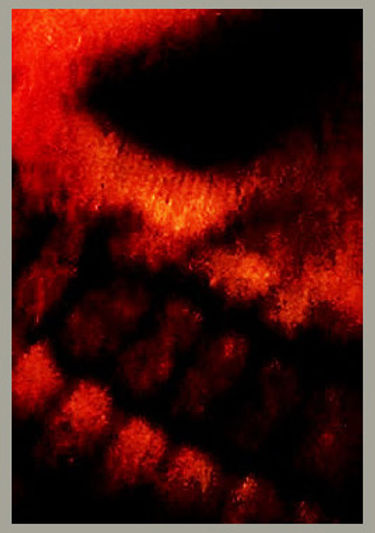
Art by Andrew Graber © 2026
The Unexpected
by Stephen Lochton Kincaid
The scratching came again. From the back door.
Dana went to the dining room window, twitched back the curtain, and tried to see what was pawing back there. Too dark, and the angle was all wrong. She couldn’t make anything out.
She dropped the curtain and went to get the flashlight, then halted in her tracks. Bad idea. That would draw them like moths to a flame. Or maybe it was more like a dinner bell? Funny thought, but she had never felt less like laughing in her entire life. The end of the world had the tendency to do that, she had discovered. To whittle away at the things that make us human.
It came again, more urgent this time, and Dana couldn’t help but think of that most famous poem by Edgar Allen Poe, “The Raven”. Not tapping at her chamber door, but a hideous scratching. And she could easily imagine the fingernails that might be producing that sound – dry and cracked, almost black with dirt and blood caked underneath them. Maybe one of them had been peeled back like a shucked oyster and the raw pink nail bed oozed where it had been laying.
She shuddered. Dana was a writer (well, had been, before this, although even then it had been a stretch – her last advance had only been for $20,000, and that was for the latest book in her very popular Vamp Tramp romantasy series; never mind what she got for her serious work), and imagination was her strong suit.
The question was, was it her dog, Beauregard, a big, lovable husky, that had had the extreme misfortune to be outside taking a potty break when the world had gone to hell in a handbasket three days ago, or was it her husband, Austin, who had gone out this morning in search of desperately needed supplies and had now returned, undead, pretending to be the dog?
They were not like the walking dead in the movies, she knew. Their yellowed, gummy eyes belied a kind of low intelligence, a craftiness. She remembered on the second day their neighbor, Dave Huberman, had started calling “Help me!” from the front yard, his voice as dead and toneless as the drone of a hornet’s nest. He was hiding in the bushes but not doing a very good job of it. From the front window, they could see the top of his head poking out, his hair matted and dirty, his left temple dented in as if someone had taken after him with a nine iron. It was as if he had known that he should hide, but not quite how to go about it. They had waited, huddled inside their house, Austin holding a baseball bat and Dana a large butcher knife, terrified and trembling, until Dave had given up. Perhaps to try the “help me” trick on someone more gullible.
More scratching. Now she thought not about Poe’s “The Raven”, but about that old story by Jacobs, “The Monkey’s Paw”, the one that had given her nightmares in middle school. It was quite a literary night, apparently. Her college English profs would have been proud.
“Beau?” she said tentatively. There came a low whining sound at that, and her hand was on the doorknob before she could even think about it.
It was Beau, it had to be, and her mind flooded with memories of him as a puppy – Beau chasing butterflies in the yard; Beau in the closet standing over the tattered remnants of one of her favorite slingback pumps, looking both sheepish and extremely gratified at the same time; Beau spinning spraddle-legged through the kitchen like a fluffy curling stone after trying to run on the freshly waxed floor. The hurt came in waves, like an emotional radiation in her chest.
She knew part of that hurt was really for Austin. She had not mourned him yet. She hadn’t dared. Some irrational but completely implacable part of her mind insisted that mourning for him could be what actually killed him.
The doorknob was turning in her hand, and Dana forced herself to stop. Her heart was sure, but she wasn’t. The question came again – Beau … or her husband, brought back to a gruesome parody of life by the monkey’s paw?
She forced herself to let go, made a lap through the kitchen to prepare herself, then came back.
This time, her hand seemed to stretch out over an infinite field before it landed on the doorknob. In her novels, her heroines were always calm and collected, always strode into battle clutching an axe or a gun (or, in one memorable scene, a chainsaw) with ice water in their veins. Dana was terrified. Beads of sweat dotted her forehead. Her nose wrinkled – she could smell the fear wafting off herself, rank as a feral animal.
She opened the door.
And Beau was on her in an instant, knocking her flat.
As she slid the knife out of the side of his head, its blade slicked with a black ichor that was technically no longer blood, maggots pelted down in her face like a ghastly rain shower. She couldn’t wipe them off. Even though she felt them squirming on her face, the best she could do was try not to gag; her other arm, wrapped with a telephone book duct-taped around the forearm, was holding Beau up. His yellowed fangs were sunk deep into the pages of that book, and the stink coming out of his mouth (he wasn’t breathing, of course, but that black socket of his mouth was less than an inch from her face, and there were gobbets of flesh hanging there that she didn’t like to think where they might have come from) was like the smell of some small animal rotting in a drainpipe. His eyes were dull blue marbles punched in his skull.
When she shoved the corpse off her, its undead legs still kicking feebly, she felt immeasurable grief and sorrow begin to well up inside her chest. And bitter loneliness.
But surprise? No, she wasn’t surprised in the least.
After all, imagination was her strong suit.
Stephen Lochton Kincaid grew up in the flatlands of Kansas. After spending most of his life there, he now lives in the Pacific Northwest, where he draws upon the lowering gray skies and primeval forests for inspiration to write the stuff of nightmares.
Andrew Graber is a self taught visual artist who enjoys using his wild imagination when he creates various forms of visual art, fiction, and poetry.